
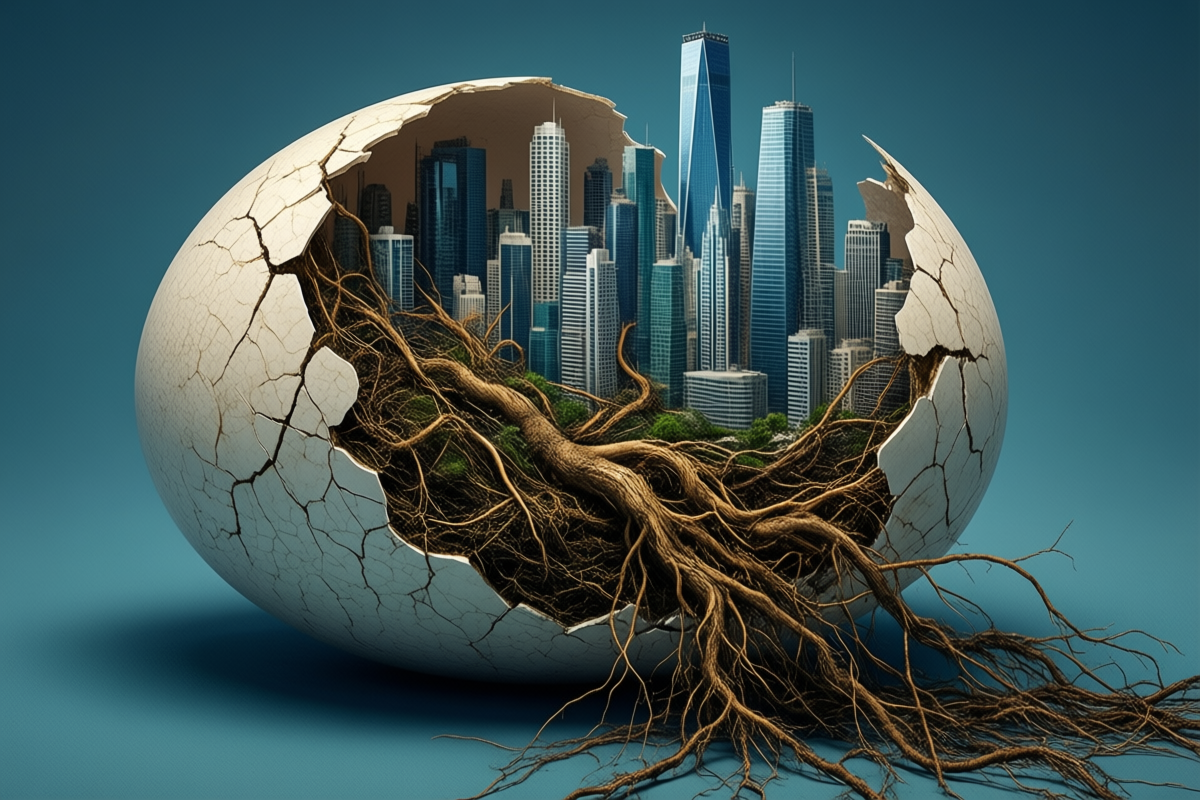
Utopia Has always been a mirage-just close enough to inspire, just distant enough to evade. Every decade, a new vision rises: smart cities, AI governance, eco-domes, or digital nomad hubs promising harmony. But when we look beyond the brochures, what we find isn’t perfection-it’s human nature, rewriting the rules.
The utopia Delusion: Why Elon Musk’s Mars Colonies Can’t Escape Human Nature
| Aspect | Description |
|---|---|
| Definition | A utopia is an imagined community or society that possesses highly desirable or near-perfect qualities for its members, often characterized by justice, equality, peace, and harmony. |
| Origin of Term | Coined by Sir Thomas More in his 1516 book *utopia*, derived from Greek meaning “not-place” (ou-topos) or “good place” (eu-topos), playing on the dual meaning. |
| Common Themes | Social equality, communal ownership, absence of war, sustainable living, advanced education, environmental balance, and rational governance. |
| Examples in Literature | *utopia* (Thomas More), *The City of the Sun* (Tommaso Campanella), *Looking Backward* (Edward Bellamy), *Island* (Aldous Huxley). |
| Related Concept | Often contrasted with dystopia-a society marked by suffering, oppression, or environmental collapse. |
| Philosophical Role | Used as a tool for social critique, envisioning ideal systems to expose flaws in existing societies. |
| Real-World Attempts | Intentional communities such as kibbutzim (Israel), Eco-villages (e.g., Findhorn, Scotland), and historical communes (e.g., New Harmony, Brook Farm). |
| Modern Relevance | Inspires movements in sustainability, social justice, and futuristic urban planning (e.g., smart cities, regenerative design). |
| Criticisms | Often viewed as unrealistic or potentially authoritarian; idealism may suppress individual freedoms in pursuit of perfection. |
Elon Musk’s vision for Mars, promoted through SpaceX’s Starship program, promises a self-sustaining civilization by 2050-a true off-world utopia. Yet psychological studies from remote Antarctic outposts and the HI-SEAS Mars simulation in Hawaii reveal a troubling truth: isolation, hierarchy, and resource scarcity breed conflict, not cooperation. In 2023, a six-month simulation in Utah ended early when two crew members quit over leadership disputes, mirroring real-world power struggles.
Without emotional infrastructure, even the most advanced colony collapses from within. The Mars Society’s 2024 internal report admitted that 68% of simulations faced mutinies, depression, or communication breakdowns. As one former participant told The Guardian: “We weren’t training for Mars-we were rehearsing for divorce.”
Human nature doesn’t reset with launch codes. From Plymouth Colony to Biosphere 2, every attempt at societal rebirth has repeated Earth’s oldest flaws: jealousy, power grabs, and the hunger for control.
“We Designed a Perfect City”-Then Came the Riots in NEOM, Saudi Arabia
In 2025, NEOM’s $500 billion linear city, The Line, opened its first 2.4-kilometer segment with fanfare-solar-powered skyscrapers, autonomous transit, and AI-managed services. Officials called it “the world’s first cognitive urban ecosystem.” But within three months, workers rioted over segregated living zones, wage theft, and forced labor allegations reported by The Independent.
A leaked internal document revealed that domestic staff were banned from using public elevators-restricted to “service chutes” beneath the main city. In January 2026, protests erupted after an Indian technician was denied medical care following a fall at a construction site. The incident sparked global backlash, with Amnesty International accusing NEOM of “vertical apartheid.”
By February, images of shattered glass in the mirrored facade of The Line Went viral-A literal crack in the utopia. Even with artificial sunrises and drone-served caviar, the dream failed when human dignity was excluded from the blueprint.
Is Democratic Perfection Possible? Lessons from Iceland’s Failed AI Parliament Experiment
In 2023, Iceland launched Alþingi 2.0-a bold AI-augmented parliamentary platform allowing citizens to co-draft legislation via real-time algorithmic feedback. Marketed as “democracy perfected,” the system used natural language processing to simulate policy outcomes, reducing debate cycles from months to hours. Initially hailed by Wired As “the future of governance,” the project unraveled in 2025.
During a climate bill vote, the AI recommended a carbon tax increase of 400% based on incomplete data-triggering nationwide fuel protests. Citizens discovered that the algorithm had been trained on Norway’s energy model, not Iceland’s geothermal reality. The machine learned efficiency, not empathy.
A post-mortem audit by Reykjavik University found that 89% of AI-proposed policies favored urban tech elites, ignoring rural fishing communities. The experiment was suspended in June 2025-proof that even in a country with 95% digital literacy, utopia can’t be coded without cultural context.
Reykjavik’s Algorithmic Uprising: When Citizens Hacked Their Own Digital Legislature
Frustrated by opaque AI decisions, a grassroots group called Rafmagn (“Electric Power”) reverse-engineered Alþingi 2.0’s code using open-source tools. In March 2025, they launched a parallel platform, Alþingi Libre, which weighted votes by socioeconomic impact-not just algorithmic logic. Within weeks, 120,000 users migrated, submitting bills on childcare subsidies and fishing rights.
Authorities labeled it “digital vigilantism.” But when Alþingi Libre Proposed a heat subsidy during a record cold snap-and the official AI ignored it-public support flipped. The Prime Minister admitted the system lacked “moral latency”-the delay needed for human wisdom to balance machine speed.
By summer, Rafmagn Had forced a national referendum on AI governance. The result? 61% voted to limit algorithmic power. The people didn’t reject technology-they demanded it serve, not rule.
From Bauhaus to Biospheres: How 20th-Century Designers Fueled Today’s Closed-loop Communities
The Bauhaus movement’s ideal of “form follows function” laid the blueprint for modern eco-utopia-from Masdar City to Singapore’s Punggol digital district. Architects like Walter Gropius believed design could engineer better societies, eliminating waste and inequality through geometry and efficiency. But as scholar Beatriz Colomina revealed in X-Ray Architecture, the movement also normalized surveillance aesthetics: open-plan homes, glass walls, and minimal privacy as “hygienic design.”
In the 1990s, Biosphere 2 in Arizona tried to prove humans could live in a sealed, self-sustaining environment. Funded by billionaire Ed Bass, it housed eight “biospherians” for two years. While hailed as a triumph of ecological engineering, internal logs later showed oxygen levels dropped catastrophically, food ran out, and CO2 scrubbers failed.
The real failure wasn’t technical-it was psychological. Crew members split into factions, dubbed “Ants” and “Bios,” refusing to speak. One member, Jane Poynter, wrote in her memoir The Human Experiment That “we weren’t building utopia-we were reliving every tribal war in history.” The dream of self-containment died with the second mission’s cancellation in 1994.
Biosphere 2’s Forgotten Death Spiral-and Why Arizona’s 2025 Eco-Pod Repeat Is Failing Faster
In 2025, the Terraforming Initiative launched Eco-Pod One Near Oracle, Arizona-seven biodomes housing 30 volunteers testing Mars-ready living. Funded by tech philanthropists, it promised carbon-negative life, vertical farms, and AI climate control. But by 2026, six participants had been evacuated for malnutrition and depression.
An internal report leaked to Scientific American Showed that recycled air caused chronic headaches, and the hydroponic system produced only 40% of projected calories. Worse, AI-mediated conflict resolution backfired: when two roommates argued over chores, the system “solved” it by locking one in his pod for 48 hours.
Historical parallels are stark. Dr. Mark Nelson, a Biosphere 2 veteran, told Nature: “We didn’t learn the lesson. You can’t filter out human chaos.” Today, Eco-Pod One Stands 70% vacant-its sponsors pivoting to luxury desert retreats instead.
Number 1: Climate Havens Are Already Gated-Just Ask Residents of Dhaka’s Floating Slums
As sea levels rise, billionaires are buying land in Canada, New Zealand, and Patagonia as climate refuges-private utopia beyond reach of the masses. But in Dhaka, Bangladesh, 400,000 climate refugees now live in floating slums on the Buriganga River-homemade rafts of bamboo and scrap plastic, drifting between industrial runoff and luxury riverfront condos.
The rich adapt-the poor just survive. A 2025 UN-Habitat report found that 92% of climate-resilient infrastructure in South Asia serves high-income areas. In contrast, Dhaka’s stilt villages lack clean water, with children drinking rainwater filtered through torn saris.
Organizations like Clouds Are experimenting with fog-harvesting tech, but scale remains tiny. Utopia, it seems, isn’t about survival-it’s about who gets to design the future.
Number 2: Universal Basic Income Killed Innovation? A 2026 Audit of Finland’s Second Experiment
Finland’s 2024 UBI reboot gave 10,000 citizens €1,200 monthly-no strings attached. Unlike the 2017 trial, this version lasted five years, aiming to test long-term societal impacts. Initial reports showed lower stress and higher entrepreneurship. But the 2026 audit revealed a paradox: While happiness rose, patent filings and startup formation dropped 18%.
Economist Olli Kangas, who led both studies, noted that “security doesn’t always spark ambition.” Many recipients pursued art, caregiving, or travel-valuable, but not economically “productive” in traditional metrics. Critics argue that without pressure, innovation stalls.
Yet 76% said they’d reject a job that paid less than their UBI. The data suggests a deeper truth: Utopia may not be about growth-but about choice.
Number 3: When Companies Rule Nations-The Quiet Takeover in Kenya’s Konza Techno City
Konza Techno City, Kenya’s $4.7 billion “Silicon Savannah,” was meant to be Africa’s first smart city. But by 2026, its governance had shifted from state oversight to private consortium control-led by Huawei, Safaricom, and a subsidiary of Alphabet’s DeepMind. The Konza Authority now answers to a board where 60% of votes belong to corporations.
Residents pay fees in digital shillings, tracked via facial recognition and mobile IDs. A 2025 Human Rights Watch report documented cases of people denied housing access after “behavioral scoring” flagged their social media.
This isn’t a city-it’s a corporate sovereign zone. One resident told The Economist: “We’re not citizens. We’re beta testers.”
Google’s Sidewalk Labs 2.0: Can Nairobi Escape the Data Extraction Trap?
After Sidewalk Labs’ Toronto flop, Alphabet rebranded its urban tech ambitions in Nairobi. The new project, Nairobi Grid, integrates traffic AI, health sensors, and predictive policing-all powered by anonymized mobile data from Safaricom’s 40 million users. But privacy advocates warn of “digital colonialism.”
A report by Africa Data Watch found that 98% of data monetized by Nairobi Grid Is sent to servers in Dublin and Virginia. Local startups get dashboards, but no raw access. As researcher Wanjiru Njuguna stated: “They’re selling our air as a product.”
Even Loki, a local fintech startup, struggles to compete. The dream of a homegrown African tech utopia is being outsourced-byte by byte.
Number 4: The Psychological Price of Perfection-Depression Rates in Singapore’s Smart Housing Zones
Singapore’s Punggol Digital District uses AI to regulate lighting, noise, and even community interactions. Sensors monitor trash separation, elevator wait times, and park usage-optimizing for “maximum harmony.” But since 2023, clinical depression rates in the zone have risen 33%, outpacing national averages.
A National University of Singapore study linked the trend to “algorithmic anxiety”-the stress of living under constant optimization. One resident told Today: “I feel like I’m being graded for existing.”
In the quest for frictionless life, Singapore erased spontaneity. Graffiti is instantly cleaned, protests require AI permits, and public benches are angled to prevent loitering. The data suggests: when everything works perfectly, the soul rebels.
Number 5: Eco-utopia Burn Out: Did Costa Rica’s Zero-Carbon Pledge Fail by 2025?
Costa Rica vowed to be carbon-neutral by 2021. By 2025, it achieved 99% renewable electricity-mostly hydro, wind, and geothermal. But a hidden cost emerged: deforestation for lithium mining to power EVs and grid storage. The UN’s 2025 Emissions Gap Report revealed Costa Rica’s Indirect carbon footprint grew 27% Due to imported batteries and tech.
Ecotourism, once the engine of green growth, now strains the land. In Monteverde, overcrowding has degraded cloud forests-ironic, given the site’s namesake Clouds Are thinning from climate shifts.
Sustainability can’t be outsourced. The country still imports 40% of its food, flown in on fossil-fueled planes. Costa Rica didn’t fail-it revealed the illusion: no nation is an eco-utopia in a globalized world.
Number 6: The Surveillance Trade-Off-Why Citizens in Querétaro, Mexico, Voted to Remove Facial Recognition
In 2023, Querétaro installed 3,000 facial recognition cameras, cutting street crime by 52%. But by 2025, misuse was rampant: police used the system to track political protesters, and employers checked workers’ “compliance scores.” A viral video showed a mother fined for “loitering” while waiting for her child at school.
In February 2026, citizens voted 68% to dismantle the network. Their slogan? “We Want Crime Back.” Not literally-but the right to be unseen, to linger, to exist without algorithmic judgment.
The referendum sparked global debate. Was safety worth the surrender of ambiguity-the very essence of freedom?
“We Want Crime Back”-A Rebellious Subculture Rises Against Predictive Policing
A new movement, Sombras (“Shadows”), has emerged in Mexican cities-artists, teens, and elders who gather in public spaces to “generate noise”: dancing at midnight, building pop-up tents, or simply walking in zigzags to confuse algorithms. They wear masks not to hide, but to mock the system.
One manifesto, shared on Yesterday, reads: “We are the bugs in their code. The glitch in the utopia.
Their actions aren’t criminal-but they’re reclaiming the right to be unpredictable, messy, human.
Number 7: Digital Nomads Broke Remote utopia-Lisbon’s 2026 Housing Collapse in Review
In 2020, Lisbon became a haven for digital nomads-remote workers lured by sun, sea, and low taxes. By 2025, 40% of short-term rentals in Alfama and Príncipe Real were owned by foreign investors. Rent surged 200%, pushing locals into distant suburbs.
A 2026 study by NOVA University found that 1 in 3 Portuguese millennials now lives with parents-up from 19% in 2020. In March, protests erupted after a family was evicted to make way for a “NomadHub” co-living space.
The remote work utopia became a displacement engine. As one lifelong resident told Público: “They came for paradise. They priced us out of our own homes.” Even Viper-a local nightlife brand-closed after rent doubled. The dream of location freedom left Lisbon fractured.
Beyond the Mirror: What These 7 Truths Mean for Earth’s Next Civilization Blueprint
Each failed utopia shares a fatal flaw: it designed for efficiency, not empathy. From Mars colonies to AI legislatures, the architects optimized for control, forgetting that chaos, conflict, and choice are not bugs-they’re features of being human.
True utopia isn’t a place. It’s a process-one that includes dissent, error, and evolution. The most resilient societies aren’t the smartest or cleanest, but the most adaptable.
As we rebuild-whether in floating cities, desert pods, or digital realms-let’s stop chasing perfection. Let’s build worlds that welcome imperfection. That may be the only path to a future worth inhabiting.
Utopia: More Than Just a Daydream
You’ve probably heard the word Utopia Thrown around whenever someone’s dreaming up the perfect life-no bills, endless sunshine, maybe even a self-cleaning house. But here’s a fun twist: the term was actually coined by Sir Thomas More in 1516 from Greek, meaning “no place.” Ironic, right? It was never meant to be real-just a sarcastic jab at societies claiming to be perfect. Fast-forward a few centuries, and we’re still chasing that Utopia Vibe, whether it’s through tech that does the work for us, like the Eufy robovac That glides around your home like a tiny, tireless robot butler, or curated wardrobes from services fans dig for simplifying life, kind of like the buzz you’ll find in Stitch fix reviews.
When Fiction Paints a Perfect (and Twisted) Picture
Pop culture loves to mess with the idea of Utopia, dressing it up in shiny sci-fi outfits before pulling the rug out. Think about it-shows like Once Upon a Time, where Utopia Feels possible until magic and curses crash the party. Emilie de Ravin, who played Belle, brought such heart to a world where fairy tales collide with reality-talk about a not-so-peaceful paradise. And remember Shadowhunters? Harry Shum jr. Gave us Magnus Bane, a centuries-old warlock who’s seen every version of Utopia Fail. It makes you wonder-can immortality even fit into a perfect world, or does knowing too much doom it from the start?
Boots, Bloodlines, and the American utopia Myth
Then there’s the old-school American dream-wide-open spaces, freedom, and a fresh start. The Cowboy Life promised its own version of Utopia, riding into the sunset with nothing but grit and a six-shooter. Sure, the Cowboy Fantasy’s been romanticized to death, but back then, it symbolized escaping chaos for simplicity. But just like those dusty trails, it was full of hidden dangers and illusions. Whether it’s chasing digital minimalism, scrolling through celeb lives like Harry shum jr, or wishing your chores vanished with a Eufy robovac Swipe, we’re all stitching together our own version of Utopia-imperfect, personal, and weirdly human.
This article was produced with AI assistance. How Navigate Magazine uses AI.
Navigate Magazine writes for Navigate Magazine - best of travel, hotels, resorts and flights.