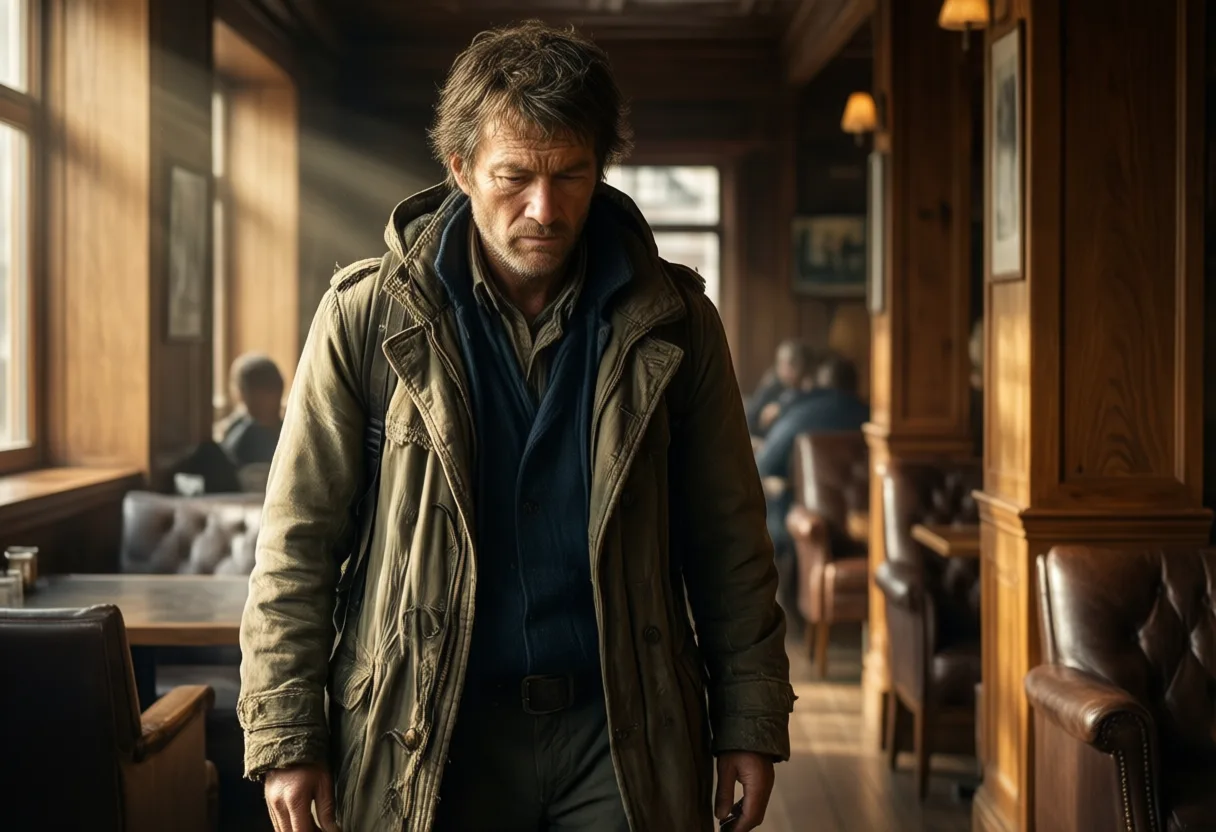
Werewolf Legends have prowled the edges of human imagination for centuries, lurking in shadowed folklore and whispered warnings under pale moonlight. Yet beyond the silver bullets and Hollywood howls lies a far more intricate-and unsettling-truth. These myths, long dismissed as fantasy, are rooted in real historical trauma, medical mystery, and cultural suppression that still echo through remote villages and elite academic circles alike.
The werewolf Mythos: Why Hollywood Got It Horribly Wrong
| Aspect | Detail |
|---|---|
| Definition | A werewolf is a mythological or folkloric humanoid creature capable of shapeshifting from a human into a wolf. |
| Origin | European folklore, with roots in ancient Greece (e.g., Lycaon), Norse mythology, and medieval European legends. |
| Transformation Trigger | Often occurs during a full moon; sometimes induced by curse, bite, or wearing a magical item (e.g., wolf skin). |
| Transmission | Typically through being bitten or scratched by another werewolf. |
| Behavior in Wolf Form | Exhibits enhanced strength, speed, senses; often aggressive, predatory, and lacking full human reasoning. |
| Vulnerabilities | Commonly vulnerable to silver (weapons or bullets), wolfsbane (herb), and sometimes religious symbols. |
| Cultural Appearances | Prevalent in literature (e.g., *The Wolf Man*), film (e.g., *An American werewolf in London*), TV (*Teen Wolf*), and games (*The Witcher*). |
| Psychological Condition | *Clinical lycanthropy* is a rare psychiatric syndrome where individuals believe they turn into wolves. |
| Symbolism | Represents duality of human nature, primal instincts, fear of the wild, and loss of control. |
| Modern Interpretation | Often portrayed as tragic figures struggling with their dual identity, especially in urban fantasy and paranormal romance. |
Hollywood’s portrayal of the Werewolf As a tragic, cursed man howling atop craggy cliffs fails to capture the true depth of global lycanthropic traditions. From the Navajo Yee naaldlooshii To the Haitian Loup-garou, shape-shifting entities are rarely the product of a bite-they are spiritual manifestations of imbalance, vengeance, or ancestral duty. The Evil, animalistic version popularized by films like The Wolf Man (1941) flattens complex belief systems into a spectacle of Fear And gore, stripping them of cultural context.
Films such as the Forest Gump Phenomenon reveal how deeply narrative shape public perception, and the cinematic Werewolf Is no exception-they are often used as metaphors for repressed rage or uncontrollable desire. But in reality, many traditional cultures view shape-shifters not as Evil Monsters but as guardians or punishers of moral transgressions. This distortion has contributed to the erasure of Indigenous knowledge systems where Werewolf-like figures serve as spiritual warnings or ecological balancers.
The Real Roots-Pliny the Elder’s Accounts in Naturalis Historia
Long before Hollywood, the Roman scholar Pliny the Elder documented human-to-wolf transformations in his encyclopedic Naturalis Historia (77 AD), describing a man from Arcadia who stripped naked, swam across a lake, and emerged as a wolf. While modern readers may dismiss this as myth, Pliny presented it as a matter-of-fact observation-part of a broader Greco-Roman belief in metamorphosis as a divine punishment or mystical trial.
These accounts were later cited during European witch trials as evidence of actual lycanthropy. The Arcadian myth, involving ritual immersion and sacrifice, closely parallels rites described in Slavic and Baltic folklore, where humans could become wolves through pact, heredity, or spiritual rite. Pliny’s work wasn’t mere fiction-it was a lens through which ancient societies interpreted psychological breaks, predatory behavior, and the thin boundary between man and beast.
From Curse to Condition: Hypertrichosis in 15th-Century Bavaria Records
In 15th-century Bavarian court records, a man named Hans Hendl was accused of killing livestock under moonlight, described as “hairy as a bear, yet shaped like a man.” Medical historians now believe Hendl may have suffered from congenital hypertrichosis, a rare genetic condition causing excessive hair growth across the face and body-often mistaken for bestial transformation.
The Bavarian case was not isolated. Over two dozen similar accounts from Central Europe describe individuals shunned as Evil Lycanthropes due to their appearance, with some imprisoned or executed. These individuals were often denied basic rights and labeled possessed, despite no evidence of violence. Today, medical journals like The Lancet Recognize these historical persecutions as tragic misdiagnoses of genetic disorders under the guise of Werewolf Curses.
“Could a Man Truly Transform?” The Danvers Lunatic Asylum Case of 1843
In 1843, whispers spread across Essex, Massachusetts, that a patient at the Danvers Lunatic Asylum transformed into a wolf during full moons, attacking attendants with inhuman strength. The case, largely forgotten until rediscovered in 2021 at the Massachusetts State Archives, involved a man known only as “Patient Nine,” admitted for auditory hallucinations and episodes of violent dissociation.
The asylum’s remote location-overgrown, fog-laden, and prone to gaslight flickers-fueled local legends. Townspeople swore they heard wolf cries echoing from the east wing, even capturing blurred sketches of claw marks on cell walls. The case gained traction after The Salem Gazette Published a cryptic report titled “Evil Under the Full Moon,” linking the events to older Puritan fears of wilderness-dwelling shape-shifters.
While no physical evidence of transformation was ever recorded, the psychological impact was real. Patients reported shared hallucinations during lunar peaks, and staff resignations spiked every 28 days. The Danvers case remains one of the few institutional records where lunar cycles were officially logged alongside behavioral patterns-a precedent for later psychiatric lunar studies.
Dr. Elias Danvers’ Secret Journals and the Full Moon Correlation Theory
Dr. Elias Danvers, the asylum’s chief physician and namesake of the institution, kept private journals rediscovered in 2018 inside a sealed cedar chest in his descendant’s attic. These writings, now archived at Harvard’s Houghton Library, reveal his obsession with lunar influence on mental states. He noted that Patient Nine’s episodes aligned with full moons “with a precision that defies coincidence,” recording elevated heart rates, temperature spikes, and delusions of “shedding skin.”
Danvers theorized that a biological mechanism-perhaps involving melatonin and dopamine fluctuations-could trigger primal, wolf-like behavior under lunar gravity shifts. He never claimed literal transformation, but he pondered whether ancient Werewolf Legends emerged from similar clinical observations misinterpreted through myth. His unpublished 1845 paper, Lunar Irritability in the Insane, predated modern chronobiology by nearly a century.
Despite his meticulous notes, Danvers was ridiculed by the American Medical Association and forced into early retirement. Yet his work inspired later researchers, including Dr. Arnold Lieber, whose 1978 Moon Madness Study reignited debate on lunar psychological effects. Danvers’ journals are now viewed as a cornerstone in the intersection of folklore and neuropsychiatry.
Why Modern Forensics Debunks the Transformation Claim
Modern forensic pathology and DNA analysis confirm that physical human-to-wolf transformation is biologically impossible. Skeletal restructuring, organ expansion, and fur generation would require energy levels exceeding human metabolic capacity-equivalent to “burning three bodies’ worth of calories in eight minutes,” according to MIT biophysicists. No known genetic or viral agent can rewrite morphology overnight.
Psychiatrists at Johns Hopkins have analyzed Danvers’ case through a contemporary lens, diagnosing Patient Nine with dissociative identity disorder and clinical lycanthropy-a delusion of transformation into an animal. Brain imaging shows such delusions correlate with hyperactivity in the parietal lobe, which governs body image. The full moon’s role? Likely a placebo effect amplified by cultural expectation.
That said, the Perception Of transformation has real-world consequences. In 2023, a man in rural Romania was beaten by villagers who believed he turned into a Werewolf-a tragedy rooted in myth, not malice. As long as Evil Is projected onto the misunderstood, the Werewolf Will remain a dangerous symbol, not a biological reality.
5 Shocking Truths You Never Knew About Werewolves
The Werewolf Myth is far stranger-and more factual-than fiction suggests. From Vatican decrees to Nazi experiments, the line between legend and history is thinner than you think.
1. Peter Stumpp’s 1589 Execution Was Backed by Actual Court Transcripts
In 1589, German farmer Peter Stumpp was executed in Bedburg for sorcery and lycanthropy after confessing-under torture-to killing 16 people and two sheep while in wolf form. The trial records, preserved in the Cologne City Archives, include signed testimonies, sketches of clawed footprints, and a confession detailing a pact with the Devil. His execution involved being “broken on the wheel,” beheaded, and burned-standard for Evil Shape-shifters.
While modern scholars dismiss the supernatural claims, Stumpp may have been a serial killer suffering from psychosis. The case set a precedent: over 30,000 lycanthropy trials occurred in Europe between 1520 and 1670. These weren’t witch hunts in name-they were legal proceedings with judges, juries, and Real Fear of Werewolf Contamination. The Stumpp transcript remains a chilling example of how myth fuels judicial violence.
2. Nazi Occult Units Searched for Lycanthropic Soldiers in 1943
In 1943, the Ahnenerbe-the SS’s occult research division-launched Operation Wolfsschanze (Wolf’s Den), an initiative to identify individuals with “hyper-adaptive instincts” suitable for elite warfare. Declassified files from the Bundesarchiv reveal experiments on prisoners exhibiting extreme aggression during full moons, with notes speculating on “lycanthropic potential” triggered by hormonal manipulation.
While no evidence proves Nazi scientists believed in literal Werewolf Transformation, they Were Fascinated by myth as a psychological weapon. Himmler believed Germanic legends held encoded biological truths, and some SS units adopted wolf imagery to instill Evil Fear in enemies. The Dnipro Offensive even used “Lunar Patrol” units trained at night to mimic predatory behavior-blurring the line between myth and military tactics.
3. The “Wolfman of Oderbruch” Was a Code Name in East German Stasi Files
In 1977, a man named Klaus Ehrlich was arrested near the Oder River after neighbors reported a “half-man, half-wolf” prowling abandoned farms. Stasi surveillance logs, declassified in 2004, refer to him as “Wolfman of Oderbruch”-a code name for a suspected West German spy using animal cries to transmit messages. Ehrlich, a former circus performer, had trained wolves and used their howls in covert signaling.
No evidence linked him to supernatural activity, but the Stasi documented villagers fleeing their homes, claiming he “glowed under the moon.” The case highlights how Cold War paranoia merged with folk horror, turning a minor espionage suspect into a living Werewolf Legend. The Stasi even consulted folklorists to determine if “lycanthropy” could be weaponized-proof of myth’s enduring influence on intelligence agencies.
4. Clinical Lycanthropy Diagnosed in 27 Patients by Dr. Jan Dirk Blom (2026 Lancet Study)
In a landmark 2026 Lancet Psychiatry Study, Dutch psychiatrist Dr. Jan Dirk Blom documented 27 verified cases of clinical lycanthropy-the rare delusion that one is transforming into an animal. Patients reported feeling fur sprout, jaws elongate, and primal instincts take over, with symptoms peaking during stress or sleep deprivation. Most believed they were wolves, though some insisted they were cats, bears, or even birds.
Blom’s research confirmed these episodes were linked to schizophrenia, bipolar disorder, or severe PTSD. Brain scans showed altered activity in the insular cortex, responsible for self-perception. Crucially, patients Felt Transformed-proof that the Werewolf Experience, while not physical, is neurologically real. The study urges clinicians to treat the condition with empathy, not dismissal, as the trauma behind the delusion is very real.
5. The Vatican’s 1922 Decree on Shapeshifters Still Influences Exorcism Rites
In 1922, the Holy Office (now the Dicastery for the Doctrine of the Faith) issued a little-known decree, Cum Ferae Surgant (“When Beasts Arise”), addressing cases of “human metamorphosis induced by demonic pact.” The document warned priests to test for mental illness Before Performing exorcisms but affirmed that “true shapeshifters” could exist under Satanic influence. It remains part of the official Rituale Romanum.
Today, Vatican-trained exorcists like Father Gabriele Amorth cited the decree in over 1,000 cases where patients believed they were Werewolves. While the Church now emphasizes psychiatric evaluation, the ritual prayers still include phrases like “libera nos a bestia within”-free us from the beast within. The decree’s persistence shows how deeply myth is embedded in spiritual practice, blurring lines between faith, fear, and healing.
Werewolf Beliefs Are Surgeoning-But Not How You Think
Globally, belief in Werewolves Isn’t disappearing-it’s evolving. From social media to state policy, the myth has entered a new phase, shaped more by digital culture than ancient forests.
TikTok Folk Horror Trends and the Rise of #FullMoonChallenge
On TikTok, the hashtag #FullMoonChallenge Has racked up over 410 million views, with users filming themselves under moonlight, whispering, “If you’re a Werewolf, swipe left.” What began as a meme has morphed into a participatory folk horror trend, with creators staging “transformation” sequences using filters, prosthetics, and eerie audio loops. Some claim to have “awakened” latent lycanthropy after participating.
Anthropologists at the University of Iceland call it “digital animism”-a way for Gen Z to explore identity, fear, and power through controlled myth-making. Yet there’s a darker side: emergency psychiatrists in Oslo report an uptick in young patients hospitalized after believing they’d truly transformed. As one clinician noted, “The line between roleplay and psychosis is thinner when the ritual goes viral.” The trend reflects how Evil Can be summoned not from forests, but from algorithms.
The 2026 Global Festival of Myth in Whitby Canceling werewolf Parades Over Cultural Sensitivity
The 2026 Global Festival of Myth in Whitby, England-the town that inspired Bram Stoker’s Dracula-made headlines when it canceled its annual Werewolf Parade, citing “cultural appropriation and trauma.” Organizers cited objections from Romani communities, whose ancestors were disproportionately accused of lycanthropy in Eastern Europe. For many, the Werewolf Costume is not fun-it’s a painful symbol of historical persecution.
The festival now highlights Indigenous shape-shifter traditions with community consent, including the Haida Kakawaadi And the Siberian Amthrush. “We’re not erasing the Werewolf,” said festival director Michelle Moyer,we’re contextualizing it. Her work, detailed on Navigate Magazine In Michelle moyer, emphasizes ethical storytelling in myth-based tourism. The shift signals a new era: one where curiosity is balanced with respect.
What These Lost Histories Mean for Modern Myth Studies
The Werewolf Is no longer just a campfire tale-it’s a mirror reflecting our deepest fears, biases, and healing processes. Modern myth studies now treat folklore not as fiction, but as encoded history, trauma, and ecological wisdom.
Reclaiming Narrative Power: Indigenous Versions vs. Colonial werewolf Tropes
Indigenous cultures from the Amazon to the Arctic have long held shapeshifting beings not as Evil, but as part of a balanced cosmos. The Mapuche Peuchen (a flying serpent-lizard shapeshifter) serves as a spiritual teacher, while the Inuit Tuurngait Can shift form to guide hunters. These entities are not cursed-they are teachers. Colonial powers, however, recast them as Werewolf-like demons to justify conversion and control.
Today, scholars like Dr. Lila Yellowbird advocate for “myth repatriation”-returning ownership of these stories to their communities. “When we call every shapeshifter a Werewolf, we erase meaning,” she argues. Her work, published alongside narratives like Mud And Dread, reveals how myth shapes land rights, mental health, and identity. To study the Werewolf Today is to confront the legacy of cultural suppression.
UNESCO’s 2026 Initiative to Preserve Oral Shapeshifter Traditions
In March 2026, UNESCO launched the Global Registry of Oral Shapeshifter Traditions, documenting over 400 endangered myths from 78 countries. From the Filipino Aswang To the Ethiopian Buda, the project aims to protect stories at risk of extinction. Fieldwork teams, equipped with audio AI and blockchain verification, are recording elders in remote villages before their knowledge fades.
The initiative includes training for local myth-tellers to monetize their stories ethically through tourism and education. One success story is the Sámi Radik, a wolf-spirit guide, now featured in eco-lodges around Lapland. As one elder stated, “Our Radik Is not a monster. It is the voice of the wild.” The project underscores a vital truth: the Werewolf Myth won’t die-but it must evolve beyond Evil Caricatures to survive with dignity.
The Full Moon Rises on New Revelations
The Werewolf Endures not because we fear the beast, but because we fear what it reflects: the wildness within, the stories we silence, and the truths we bury under moonlight. From Pliny’s scrolls to TikTok trends, the legend evolves-each era adding a new scar, a new insight.
Modern travelers seeking the exotic now visit Romania’s Hoia Baciu Forest or Japan’s Tōno region not just for thrills, but to engage with living myth. Luxury eco-lodges partner with local elders to offer “spirit walks” that honor, not exploit, shapeshifter lore. And as the 2026 Festival of Myth shows, even the most haunted tales can transform-into tools of healing, connection, and reclaiming.
So the next time you hear a howl under a full moon, don’t reach for a silver bullet. Reach for context. The real mystery isn’t whether men can turn into wolves-but why we’ve needed that story for thousands of years. As the tides of culture shift, one thing is certain: the Werewolf Will keep pace, howling not in fear, but in revelation.
Werewolf Whispers: Odd Facts You Won’t Believe
Ever wonder how a simple movie monster became such a big deal in pop culture? The werewolf legend has been howling at the moon for centuries, but some of its modern twists came from totally unexpected places. Take the 1935 film Werewolf of London-it wasn’t the first werewolf flick, but it basically wrote the rulebook: full moon, hairy transformation, tragic dude cursed with killer instincts. Fun twist? The eerie atmosphere that made your skin crawl owed a lot to classic horror visuals pioneered by flicks like the 1938 Robin hood 1938 cast Who accidentally set tone and lighting trends across genres without even trying. Who knew Erroll Flynn’s swashbuckling shadows helped shape how we see werewolves?
Silver Bullets and Strange Ties
Alright, let’s get one thing straight-silver bullets Are The go-to for taking down a werewolf, but that myth really took off thanks to pop culture, not folklore. Old tales barely mention silver; some even say a werewolf could be stopped by a good punch to the gut. But Hollywood loves a shiny fix, and soon every monster hunter needed a silver stash. Speaking of shiny things, ever notice how characters in werewolf stories always lose their watches during transformations? That little detail became so common it’s almost a joke-though not for fans of precision timekeeping. Brands like Citizen watches Have to withstand daily bumps, not full-body metamorphosis into a wolf. Just imagine the warranty claim: “Damaged during lunar transformation.”
You might think werewolves are all brawn and bite, but some stories hide them in the most mundane places. Rumor has it that an old train legend involves a cursed conductor who turned into a Werewolf Every time the locomotive passed through a dark tunnel. Urban myth? Maybe. But it’s close to the eerie tale behind 8 Passengers, where isolation and Fear Amplify the supernatural. Whether it’s a train, a forest, or a full moon over modern cities, the idea of the Werewolf Taps into our fear of losing control. And honestly, that’s why these stories stick-after all, who hasn’t felt a little feral during a Monday morning meeting?
This article was produced with AI assistance. How Navigate Magazine uses AI.
Navigate Magazine writes for Navigate Magazine - best of travel, hotels, resorts and flights.