
Kyoto’s Hidden Temples and Tea Houses
In the hush before dawn, when the stone paths of Arashiyama are still damp with dew and the city breathes in slow, deliberate rhythms, Kyoto reveals itself not as a destination but as a state of mind. I once sat on a wooden engawa, sipping matcha prepared by a tea master whose hands moved with the certainty of centuries, and in that moment, Time Folded in on itself. This is a city that guards its soul behind sliding shoji screens, where tradition isn’t performed-it’s lived.
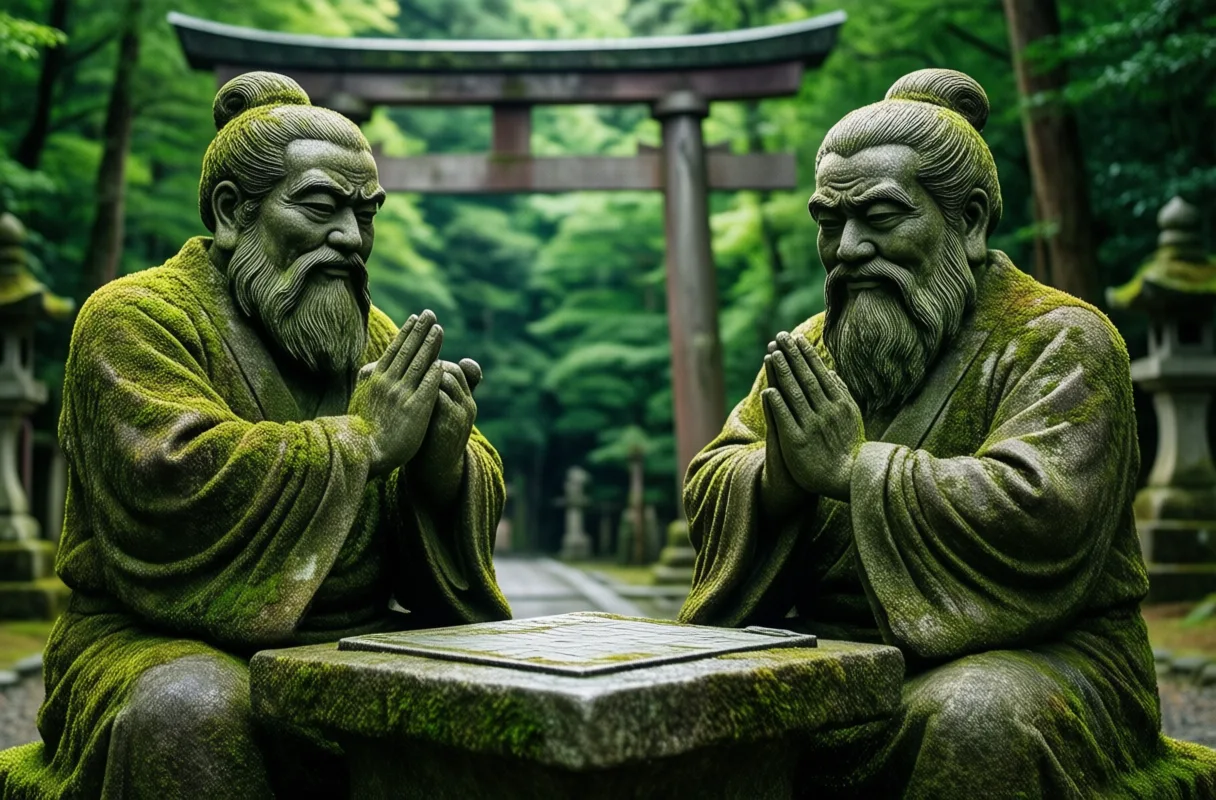
The true essence of Kyoto unfolds beyond the postcard sights. While Fushimi Inari’s red torii gates draw crowds, it is in the lesser-known temples like Otagi Nenbutsu-ji, nestled in the forested hills of western Kyoto, where silence hums with presence. Here, moss-covered stone rakan statues-each with a distinct, almost mischievous expression-stand like quiet sentinels of a spiritual lineage that has weathered modernity’s tide. The air carries the faint scent of incense and wet cedar, a perfume that lingers long after you’ve stepped back onto the gravel path.
Tea houses tucked into the backstreets of Gion and Kamigyō offer more than ceremony-they offer communion. A proper tea experience is never rushed; it is an exercise in mindfulness, where every gesture, from the folding of the fukusa cloth to the precise angle of the bowl, speaks of intention. I remember one afternoon in a centuries-old machiya, where the hostess paused mid-ritual to point out the subtle shift in light filtering through the paper screen-a reminder that beauty lives in transience.
What stays with you isn’t the perfection of the ritual, but the humility behind it-the quiet understanding that mastery is measured not in spectacle, but in stillness.
Luang Prabang: Where Monks Walk and Time Stands Still
At five in the morning, the streets of Luang Prabang are still shadowed, the air cool and thick with the scent of frangipani and woodsmoke. Barefoot, in saffron robes, the monks walk in silent procession, their alms bowls catching the first pale light. This daily tak bat ritual is not staged for visitors; it is a Living thread Connecting the people of Laos to their faith, a rhythm unchanged for generations.
The Town itself Feels suspended between worlds. French colonial villas with peeling shutters stand beside golden-walled temples, their roofs curling like incense smoke toward the sky. The Mekong River, wide and slow at this bend, reflects the silhouette of Phou Si hill, where steps worn smooth by pilgrims lead to a stupa that watches over the valley. Here, life moves at the pace of a paddle through still water-deliberate, unhurried, attentive.
Temples like Wat Xieng Thong and Wat Mai are not merely architectural treasures; they are centers of daily life. Elderly women kneel on woven mats, lighting candles and offering lotus buds, while novices recite sutras in low, melodic tones. At dusk, the sound of a single gong reverberates across the peninsula, a call that seems to slow the turning of the earth.
Even the bustling morning market, with its pyramids of sticky rice and baskets of river fish, feels like a continuation of ritual. Vendors greet each other by name, their exchanges laced with laughter and respect. In Luang Prabang, culture isn’t something you observe from a distance-it seeps into your bones through the quiet dignity of everyday acts.
Battambang’s Bamboo Train and Rural Heartbeat
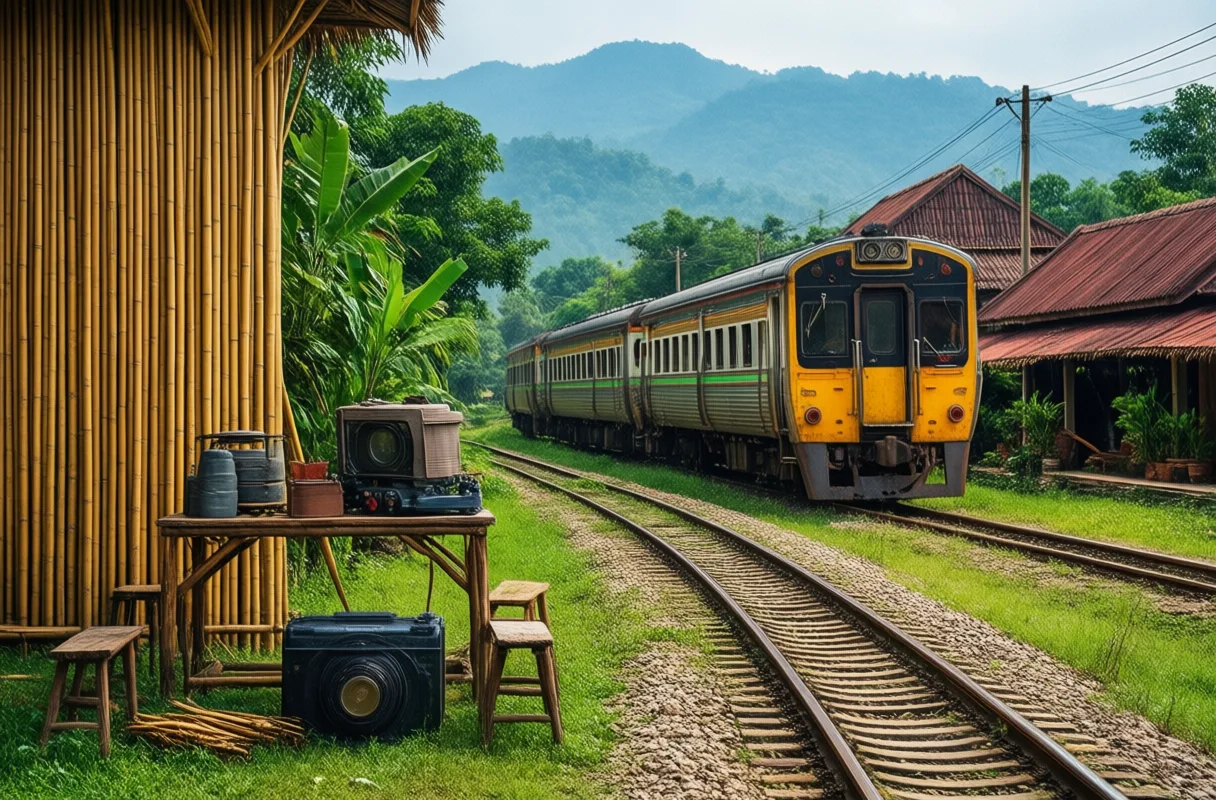
The bamboo train, or nori, is not a tourist ride-it began as a makeshift solution, born from necessity in the aftermath of conflict, and still runs on ingenuity. A Flat wooden Platform mounted on bamboo axles and powered by a small motor, it glides over rusting rails that snake through rice fields and sugar palm groves. When two noris meet, the lighter one is lifted aside by hand, a dance of cooperation that speaks volumes about Cambodian resilience.
This quiet province in western Cambodia unfolds like a watercolor left in the sun. Battambang’s colonial architecture, with its shuttered windows and wide verandas, whispers of a past layered with French influence and Khmer tradition. But the soul of the place pulses in the villages beyond the Town center, where farmers bend over flooded paddies and children wave from the edges of dirt roads. There is no pretense here, only the steady rhythm of life shaped by seasons and soil.
Art endures, too, in unexpected places. A former French barracks now houses Phare, the Cambodian Circus, where young performers channel personal and national histories into acrobatics, music, and theater. Their shows are not spectacles of escape, but acts of remembrance and reclamation-stories told through the body when words fall short.
One evening, I shared a meal with a local family in a stilted wooden home, eating fish amok steamed in banana leaves and listening to an old man play the tro, a two-stringed fiddle whose mournful notes seemed to carry the weight of memory. In that moment, I understood: authenticity isn’t found in Untouched places, but in the courage to keep living, creating, and welcoming.
Sapa’s Terraced Hills and Textile Traditions
The mountains of northern Vietnam rise like folds in a wrinkled silk cloth, carved over centuries into emerald terraces that catch the mist and sunlight in equal measure. Sapa, once a sleepy hill station, has become a crossroads where tradition and tourism quietly negotiate space. But venture beyond the main trails, and you’ll find villages where the Hmong, Dao, and Tay peoples continue to live in rhythm with the land.
Textiles here are more than clothing-they are language. Each pattern, stitch, and color carries meaning: a zigzag may represent the path of ancestors, a diamond the eye of the guardian spirit, red thread the bloodline of a family. Women in indigo-dyed tunics sit outside their homes, spinning thread on wooden spindles, their fingers moving with the ease of lifelong practice. In the market of Sa Pa town, stalls overflow with hand-embroidered bags and jackets, each one a testament to hours of quiet labor.
I once followed a narrow path to a village where a Dao elder invited me into her home. Over cups of strong mountain tea, she showed me a child’s jacket she was finishing-tiny silver coins sewn along the collar, meant to ward off evil. “We make beauty not for sale,” she said, “but because it is how we remember who we are.”
Hiking through Muong Hoa Valley, where stone carvings older than memory lie half-buried in the earth, I felt the weight of continuity. These hills have seen empires rise and fall, yet the people still plant, weave, and sing in dialects that predate modern borders. To walk here is to move through layers of time, where every step feels like a conversation with the past.

Gyeongju: Korea’s Ancient Capital Unseen
Gyeongju does not announce itself. There are no towering skyscrapers or neon signs to mark its significance-only quiet streets lined with ginkgo trees and the occasional glimpse of a stone pagoda peeking through the foliage. Once the capital of the Silla Kingdom, this city in southeastern Korea holds centuries within its soil, where history isn’t confined to museums, but blooms in temple gardens and burial mounds hidden in plain sight.
Wandering through the Tumuli Park, you’ll find grass-covered tombs scattered like sleeping giants across the landscape. No fences, no grand entrances-just simple markers and the occasional bench where an elderly couple might sit, sharing tangerines in silence. These are the resting places of kings and queens, yet they feel intimate, almost humble, as if the earth itself has chosen to cradle them gently.
Bulguksa Temple, a UNESCO site set against the forested slopes of Toham Mountain, rises with quiet majesty. Stone bridges span symbolic rivers of separation between the mundane and the sacred, while wooden halls house Buddha statues whose eyes seem to follow you with knowing calm. Nearby, Seokguram Grotto shelters a solitary granite Buddha, his face illuminated by the first rays of sunrise-a moment of sublime stillness that feels almost private.
One evening, I joined a local family releasing lotus lanterns into a temple pond during a quiet festival. No crowds, no announcements-just the soft glow of paper lights drifting on dark water, each one carrying a whispered wish. In Gyeongju, culture isn’t performed for outsiders. It is lived, remembered, and passed on-one quiet gesture at a time.
| Location | Experience | Cultural Significance |
|---|---|---|
| Luang Prabang, Laos | Tak Bat morning alms ritual | Daily Buddhist practice connecting monks and community |
| Kyoto, Japan | Traditional tea ceremony in machiya | Mindful ritual expressing intention and humility |
| Battambang, Cambodia | Riding the bamboo train (nori) | Practical transport reflecting post-conflict resilience |
| Sapa, Vietnam | Hand-embroidered tribal textiles | Patterns convey ancestral stories and family identity |
| Gyeongju, South Korea | Ancient tombs and temple visits | Living history integrated into everyday landscape |
| Bhaktapur, Nepal | Water buffalo in narrow alleyways | Unchanged agrarian life in a historic city |
| Sumba, Indonesia | Pasola ritual horseback battle | Ancestral festival ensuring harvest and honoring tradition |
Where Tradition Lives On
Living Heritage on the Move
Forget cookie-cutter tours; Asia’s true magic lies in experiences woven into daily life. In Luang Prabang, Laos, dawn isn’t just a time of day-it’s a sacred ritual. Witness the Tak Bat, where saffron-robed monks walk barefoot through the streets in silent procession, collecting alms of sticky rice from locals and respectful visitors. This isn’t a performance; it’s a centuries-old practice central to Theravada Buddhist life, offering a quiet, profound moment of connection. Skip the flash and join the locals sitting respectfully on the roadside, the hush broken only by the rustle of robes and the soft clinking of alms bowls.
Head to Bhaktapur in Nepal’s Kathmand dev Valley, and you’ll find time seems to slow. This ancient city, largely untouched by modern sprawl, feels like stepping into a living museum. Cobbled streets wind past intricately carved wooden windows and pagoda temples, while locals still bake Bhatmas (lentil cakes) in traditional clay ovens. One quirky sight? Farmers guiding water buffalo through narrow alleyways to till nearby fields-a scene unchanged for generations, offering a genuine glimpse into agrarian rhythms often lost elsewhere. The air often carries the sweet, smoky scent of Sel roti, a rice flour doughnut-like treat fried fresh in neighborhood stalls.
Venture further to the island of Sumba in eastern Indonesia, and you’ll encounter the thrilling Pasola Festival. This isn’t just a cultural show; it’s a high-stakes ritual rooted in ancestral tradition. Horsemen from rival villages charge at each other across the beach, hurling wooden spears in a mock battle meant to honor ancestors and ensure a good harvest. While it looks fierce, serious injuries are rare thanks to strict rules and protective gear. The festival’s timing, based on the lunar calendar and the sighting of a specific type of worm, adds to its mystique-no fixed dates here, just deep connection to nature and heritage. Explore more stories, videos, and creators on Loaded.
Frequently Asked Questions
What is the Tak Bat ritual in Luang Prabang?
The Tak Bat is a daily morning ritual where saffron-robed monks walk barefoot in silent procession to collect alms, such as sticky rice, from locals and visitors. It is a centuries-old practice central to Theravada Buddhist life and not performed for tourists.
What makes Kyoto’s tea houses special?
Kyoto’s tea houses offer more than ceremony-they provide communion through mindfulness. Every gesture in the tea ritual, from folding the fukusa cloth to the angle of the bowl, reflects intention and humility, not spectacle.
What is the bamboo train in Battambang?
The bamboo train, or nori, is a simple platform on bamboo axles powered by a motor, used as a practical transport solution. When two meet, the lighter one is lifted aside by hand, reflecting Cambodian resilience and cooperation.
What cultural significance do textiles have in Sapa?
In Sapa, textiles are a form of language, where patterns, stitches, and colors carry meaning. Zigzags may represent ancestral paths, diamonds the guardian spirit’s eye, and red thread a family’s bloodline.
This article was produced with AI assistance. How Navigate Magazine uses AI.
Saniya delves into the intersection of travel and identity, profiling local artisans, culinary traditions, and community-led tourism initiatives. Her work highlights how travel can foster connection, equity, and deeper understanding between cultures.